Skip to Content

Demographics

The 2010 Census: The Stakes of an Accurate Count

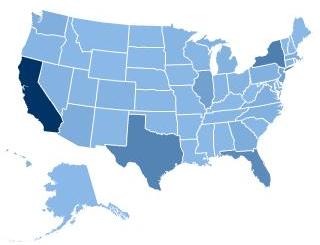
Every 10 years, as required by the U.S. Constitution, the federal government undertakes a massive nationwide effort to count the residents of the United States, who now number more than 300 million.  The results form the basis for the apportionment of congressional districts and the distribution of hundreds of billions of dollars in federal funds, as well as serving to guide a wide range of community-planning decisions across the country.DD  The Census is, however, no stranger to controversy, such as the suggestion by some activists that immigrants sit out the Census this year to protest the federal government’s failure to enact comprehensive immigration reform.DD  Yet, among demographic groups like immigrants and ethnic minorities who are typically under-counted in the Census, a boycott would be self-defeating.  Moreover, anyone living in an area afflicted by a large under-count of any sort stands to lose out on political representation and federal funds.DD  For instance, an undercount of Latino immigrants would impact anyone living in a state such as California, New York, or Illinois that has a large population of Latino immigrants—meaning that everyone in those states stands to lose political representation and access to economic and educational opportunities if their residents aren’t fully counted in 2010.

Reapportioning seats in Congress:Read more...

Published On: Wed, Mar 03, 2010 | Download File

Protecting Children in the Aftermath of Immigration Raids

Study Finds Significant Behavioral Changes in Children After Raids

Children of unauthorized immigrant parents are often forgotten in debates over immigration reform.  There are roughly 5.5 million children living in the United States with unauthorized immigrant parents—three-quarters of whom are U.S. born citizens.  These families live in constant fear of separation.  The Department of Homeland Security (DHS) estimates that over the last 10 years, more than 100,000 immigrant parents of U.S. citizen children have been deported from the United States.  

A new report by the Urban Institute, Facing Our Future: Children in the Aftermath of Immigration Enforcement, examines the consequences of parental arrest, detention, and deportation on 190 children in 85 families in six locations across the country. The report found that raids and other ICE actions that separate parents and children pose serous risks to children’s immediate safety, economic security, well-being, and long-term development. In most cases, two-parent homes became single-parent families after one parent was detained.  At least 20 families in the study were forced to decide whether children—many of whom are native born U.S. citizens—would leave the country with their deported parent or remain with the other parent or other relatives. The Urban Institute interviewed families affected by ICE actions at the following six sites: Read more...

Published On: Mon, Feb 22, 2010 | Download File

Granting Refuge: Temporary Protected Status (TPS) for Haitians in the United States

Following the devastating earthquake which struck Haiti on January 12, Homeland Security Secretary Janet Napolitano on January 15 announced “the designation of Temporary Protected Status (TPS) for Haitian nationals who were in the United States as of January 12, 2010.”  The “designation will allow eligible Haitian nationals in the United States to continue living and working in our country for the next 18 months.”  This means that the 100,000-200,000 Haitian immigrants whom the Department of Homeland Security (DHS) estimates are now in the United States on a temporary basis or without authorization will not be subject to removal as long as there is no functioning country to which they can return, and provided that they do not have criminal records.  However, Haitian nationals who qualify for TPS are not receiving permanent residence in the United States or an “amnesty” if they were unauthorized.  There are currently 535,000 Haitian immigrants in the United States, with most living in Miami and New York, as well as Boston, Orlando, and Atlanta.

TPS as Humanitarian Relief

Temporary Protected Status (TPS) is a temporary, humanitarian form of relief from deportation that does not include the granting of permanent residence in the United States, nor the granting of “amnesty” to unauthorized immigrants.Read more...

Published On: Fri, Jan 22, 2010 | Download File

The Immigration Policy Center's Top 10 Resources of 2009

As the year comes to a close, The Immigration Policy Center brings you its top 10 list of resources from 2009.

Published On: Fri, Dec 18, 2009 | Download File

Immigrant Workers Contribute in Large Metropolitan Areas

The Fiscal Policy Institute (FPI) recently released a report highlighting the contributions of immigrant workers in the 25 largest metropolitan areas in the U.S. FPI’s report broadens a growing understanding that immigrant workers make important economic contributions to the U.S. and to their local economies. Immigrants are likely to be of prime working age, work in occupations across the economic spectrum, and contribute robustly to economic growth in each of the 25 metropolitan areas studied and in the United States as a whole.

Published On: Tue, Dec 01, 2009 | Download File

The Economic Blame Game: U.S. Unemployment is Not Caused by Immigration

Today, on Capitol Hill, Congressmen Steve King and Lamar Smith will host a forum on the impact of “illegal immigration on American jobs.” Panelists will likely attempt to draw a direct correlation between U.S. immigration policy and unemployment, just as they do with all other domestic issues including the environment, security and health care. As in the past, their solution is deportation, their tactic is division, their position is the status quo, and their plans neither help American workers or solve our immigration crisis. The Immigration Policy Center (IPC) has developed the following fact check to further debunk claims that U.S. unemployment is caused by immigration.

Published On: Thu, Nov 19, 2009 | Download File

Essential to the Fight: Immigrants in the Military Eight Years After 9/11

From the Revolutionary War to the current conflicts in Afghanistan and Iraq, immigrants have made significant contributions to the United States by serving in our military forces. Today, immigrants voluntarily serve in all branches of the U.S. military and are a vital asset to the Department of Defense. To recognize their unique contribution, immigrants serving honorably in the military who are not yet U.S. citizens are granted significant advantages in the naturalization process. Over the past eight years, Congress has amended military-related enlistment and naturalization rules to allow expanded benefits for immigrants and their families and encourage recruitment of immigrants into the U.S. Armed Forces. Without the contributions of immigrants, the military could not meet its recruiting goals and could not fill its need for foreign-language translators, interpreters, and cultural experts. This latest Special Report reflects on the vital role immigrants have and continue to play in keeping our nation safe.

Published On: Mon, Nov 09, 2009 | Download File

Earned Legalization: Repairing our Broken Immigration System

We can expect every major piece of comprehensive reform legislation to tackle the issue of creating a legal status for the 11- 12 million undocumented immigrants residing in the United States.  Ultimately, most politicians and policy makers agree that practically, the U.S. cannot deport this population, and some kind of process for legalizing status is necessary.  However, there remains a temptation to create high penalties in exchange for a green card because many politicians want to ensure that people have paid the price for coming to the country illegally.  An overly punitive process, however, ultimately defeats the purpose of a legalization program because it will deter people from participating and potentially drive people further underground.  A successful legalization program combines measured penalties with clear and achievable goals that will get the maximum number of people into the system, identify the relatively few who do not belong here based on criminal activity,  and integrate those who can contribute their talents as quickly as possible. 

Read more...

Published On: Thu, Nov 05, 2009 | Download File

Breaking Down the Problems: What's Wrong with Our Current Immigration System?

While some characterize our immigration crisis as solely an issue of the 11 to 12 million unauthorized immigrants living in this country, our problems extend beyond the number of undocumented people to a broader range of issues. Read more...

Published On: Wed, Oct 21, 2009 | Download File

American Roots in the Immigrant Experience

The U.S. Census Bureau recently released data on the Latino population of the United States that underscores the extent to which the immigrant experience is embedded in the social (and political) fabric of the United States. The political significance of these statistics is apparent in the most recent IPC Fact Check. Latinos comprise the fastest-growing group of voters in the United States. The number of naturalized U.S. citizens is increasing rapidly and the electoral clout of New American voters who share a direct, personal connection to the immigrant experience—that is, naturalized citizens and the U.S.-born children of immigrants—is on the rise.

Published On: Mon, Oct 19, 2009 | Download File